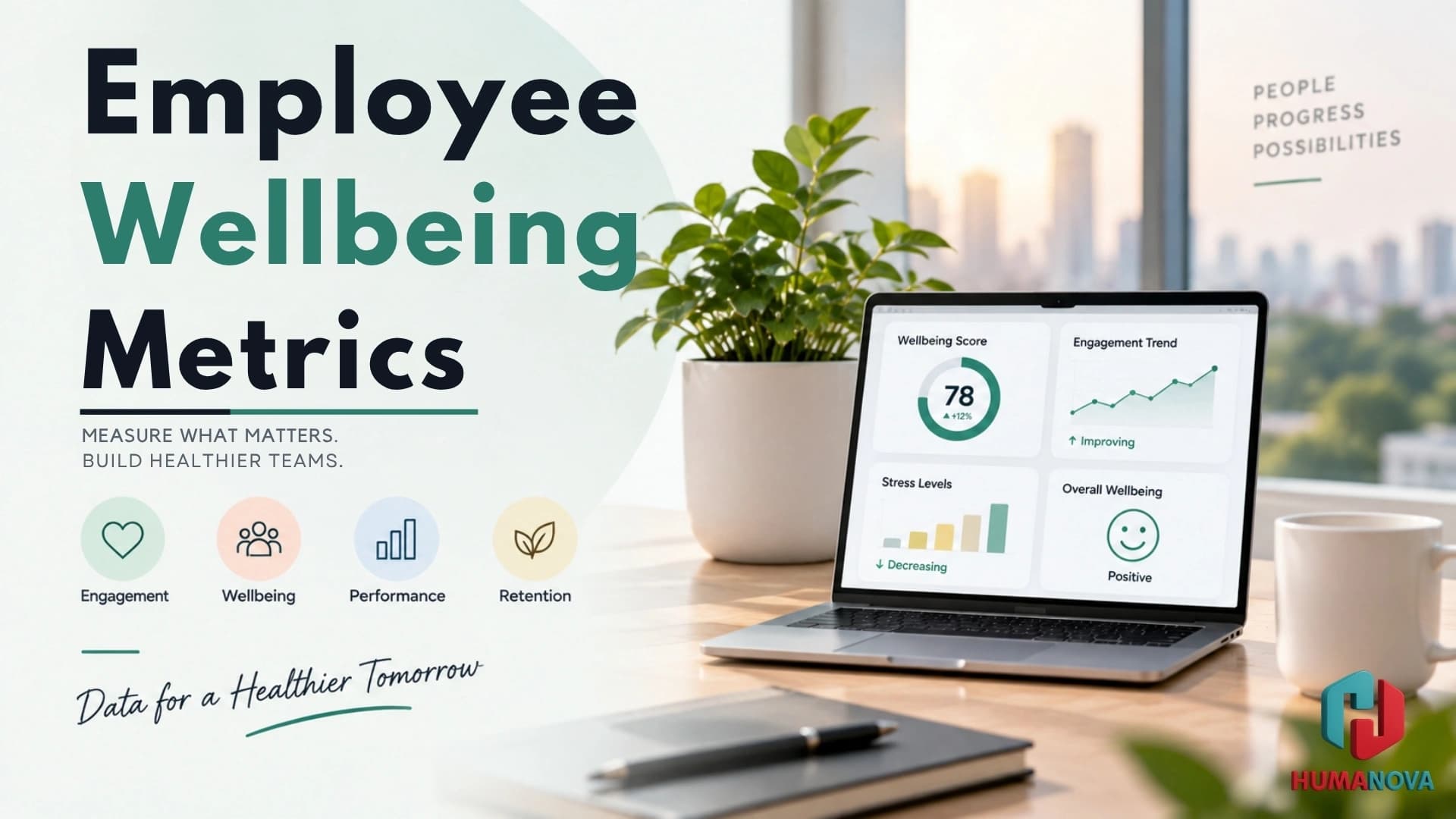
Employee wellbeing metrics are the specific numbers HR teams track to understand how a workforce is coping, mood scores, anonymous survey sentiment, counseling utilization, absenteeism trends. On their own, none tell the full story. Tracked together and reviewed regularly, they show whether a team is holding steady or quietly heading toward burnout.
Why Picking the Right Metrics Matters
Most companies already collect some wellbeing data, an annual survey, maybe an exit interview log. The problem usually isn't a lack of data. It's that the numbers tracked don't predict anything useful, or get reviewed too infrequently to catch a problem while it's still fixable.
A good metric is both sensitive to what is truly amiss, and it can be gathered frequently enough to display trends, rather than simply snapshots of one moment.
Core Metrics Worth Tracking
Mood Score Trends
A short, recurring check-in, often a single question rated on a simple scale, builds a running picture of team sentiment over weeks and months. The value isn't in any one score; it's watching the trend line move after a tough sprint, a reorg, or a round of layoffs elsewhere in the industry.
Anonymous Survey Participation and Sentiment
Two things matter here, not just one. Participation rate tells you whether people trust the process enough to engage at all. Sentiment, what they're actually saying, tells you what's driving morale up or down. High participation paired with declining sentiment is usually the clearest early warning HR gets.
Confidential Counseling Usage
Tracked in aggregate, never by name, counseling usage shows whether employees are reaching for support when they need it. A sudden spike often correlates with a specific event, a deadline crunch, a restructuring announcement, which makes the timing almost as useful as the number itself.
Absenteeism and Sick Leave Patterns
Absenteeism clustering around certain weeks or teams, rather than spread evenly, often points to something specific rather than general seasonal illness. This works best paired with mood data, since a dip in mood followed by rising sick leave a few weeks later is worth investigating.
Manager-Level Engagement Scores
Summing up the mood and survey data on the team level, instead of just company level, shows which specific managers require attention. A company-wide average may appear good, but it conceals one or more teams that are performing poorly.
Voluntary Attrition by Team
Company-wide attrition numbers hide a lot. Breaking attrition down by team shows whether resignations are spread evenly or concentrated under specific leadership, a pattern other metrics, like engagement scores, often predicted months earlier.
How Often to Review These Metrics
Mood scores and survey sentiment are worth checking weekly or biweekly, since they shift quickly. Counseling usage and absenteeism are clearer on a monthly view. Attrition, being a lagging indicator, is best reviewed quarterly alongside the other numbers, not as a standalone report.
Reviewing everything once a year, the way many companies still do, means most metrics lose their main advantage: catching a problem early enough to actually do something about it.
Turning Metrics Into Action
A dashboard full of numbers doesn't help anyone unless it's tied to a next step. A mood score dropping for two weeks straight should trigger a manager check-in, not just get logged in a spreadsheet nobody revisits. This is where most tracking efforts quietly fall apart, companies measure well but never build a habit of acting on what the numbers show.
If you want to go further to understand how each individual data point can be used in a larger tracking system, our guide to employee wellbeing analytics will help you understand how to integrate all of these data points into one unified view as opposed to a collection of standalone reports.
Humanova aggregates all the mood tracking, anonymous survey data and manager dashboards in one place, allowing Indian HR teams to view them as a whole and not different sets of numbers from five separate tools.
Transform your workforce wellbeing today
Interested in learning how Humanova can elevate your team's wellness and HR metrics? Connect with our team for a personalized walkthrough.
FAQ: Employee Wellbeing Metrics
1. What are the most important employee wellbeing metrics to track?
Mood trends, anonymous survey sentiment, and confidential counseling usage give the earliest signals. Absenteeism and team-level attrition matter too, but they usually confirm a problem rather than catch it early.
2. How often should these metrics be reviewed?
Fast-moving metrics like mood scores work best checked weekly or biweekly. Slower ones like attrition are better reviewed quarterly, since they change less often and need more context to interpret.
3. Can small companies track wellbeing metrics without a big HR team?
Yes, platform-based tools have made this accessible without a dedicated analyst. Consistency matters more than headcount; a small team checking the same numbers regularly learns more than a large team reviewing everything once a year.
4. Do these metrics work without breaking employee anonymity?
Yes, if properly designed. Grouping the responses, instead of showing each individual response, allows employees to respond truthfully without losing out on providing HR with information.
5. What's the difference between a leading and a lagging wellbeing metric?
Leading metrics, like mood scores and survey sentiment, tend to shift before a problem becomes visible elsewhere. Lagging metrics, like attrition, confirm something went wrong after the fact, which is why leading metrics matter more for prevention.
6. What's the most common mistake companies make with wellbeing metrics?
Collecting data without a clear plan for who reviews it and what happens next. Even the most predictive metric is useless if a declining trend never triggers an actual conversation or change.
Ready to see all your team's wellbeing metrics in one place, instead of scattered across five different tools?