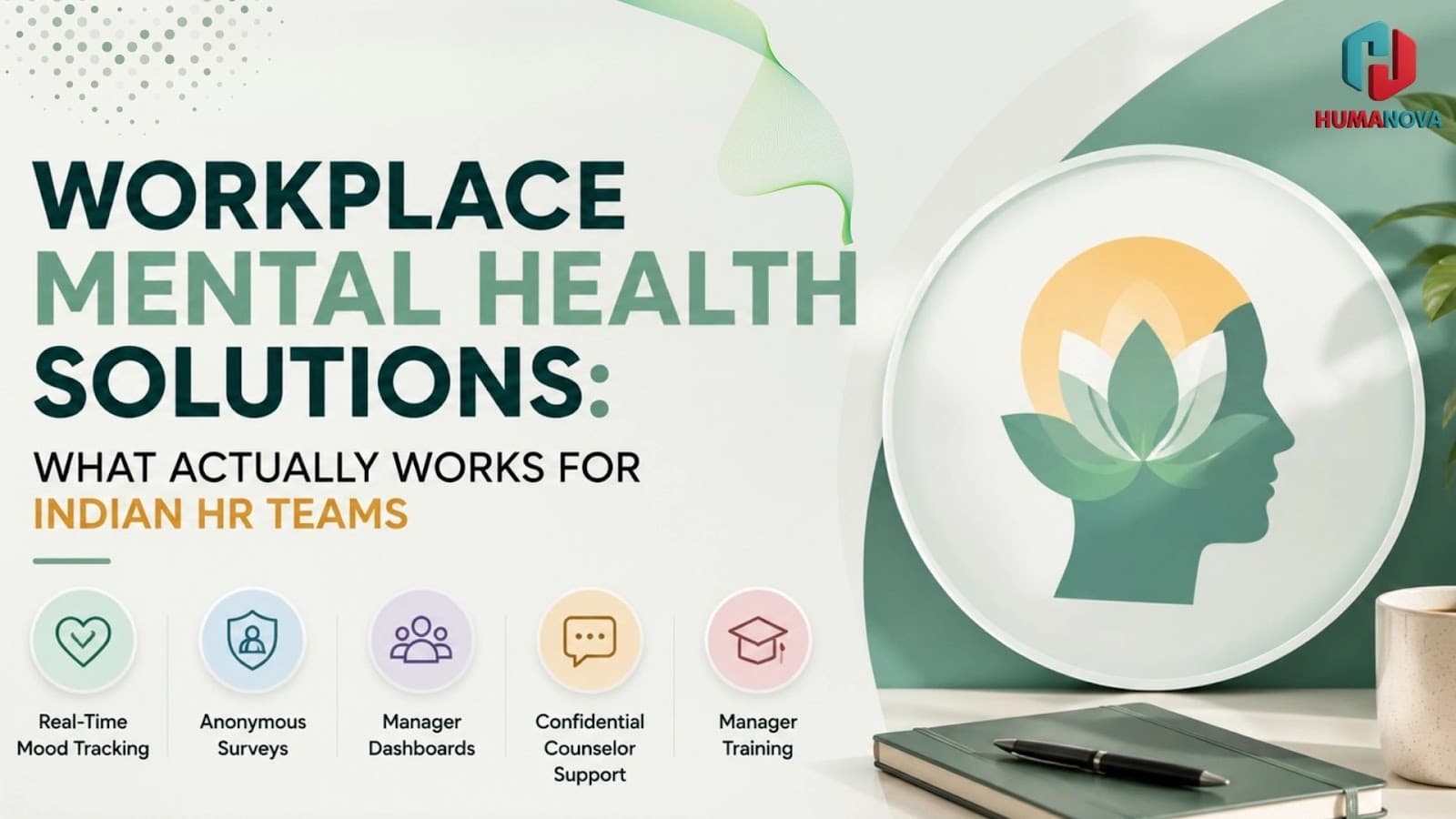
Workplace mental health solutions encompass the various tools, policies and support systems organisations use to prevent burnout and capture employee distress early – before it becomes absence, turnover or a health crisis. The best solutions are those that include all of these elements, not just one wellness benefit, and that they are carefully integrated into the program.The best solutions are those that track mood in real time, are anonymous, have confidential counseling, and have manager training, all closely integrated in the solution.
Why This Is an Urgent Issue for Indian Employers
Burnout in India isn't a fringe concern, it's one of the most severe in the world. Research places India's burnout rate at around 59%, the highest of any country surveyed globally, against a worldwide average closer to 20%. Long working hours are a major contributor, with South Asia averaging roughly 49 hours a week, among the longest of any region measured.
The cost isn't abstract either. Untreated mental health strain has been estimated to cost Indian businesses well over $150 billion a year in lost productive days, while investing meaningfully in employee mental health could unlock tens of billions more in productivity gains annually. For HR leaders building a budget case, the cost of doing nothing is often the easier number to defend.
Why Traditional EAPs Fall Short
Employee Assistance Programs have existed in India for years, but usage remains low almost everywhere they're offered. The gap usually isn't awareness of the benefit, it's trust. Employees often assume, rightly or wrongly, that using an EAP will somehow reach their manager, so they simply don't use it, even when it's available for free.
The Core Pieces of an Effective Solution
A real mental health strategy is a system, not a single tool. Each piece below addresses a specific failure point in older, single-perk approaches.
Real-Time Mood Tracking
An annual survey is done too late to catch problems. An occasional recurring check-in about mood provides an ongoing pulse on how teams are really feeling, and when there's a dip after a tough sprint or a reorg, it's not too late to catch it.
Anonymous Surveys People Actually Trust
Anonymity changes what people are willing to say. Employees who stay quiet in a named survey about workload or a difficult manager will often speak up when their identity is genuinely protected, which makes anonymous data more accurate, not just more comfortable to collect.
Manager Dashboards That Protect Individuals
HR needs visibility into which teams are struggling, without seeing who said what. Getting this balance wrong in either direction, too little data to act on, or too much detail that breaks trust, is where most legacy wellness tools fail.
Humanova is built around this exact balance, giving HR leaders aggregated, anonymous mood and survey data through manager dashboards, so leaders can spot real problems early without ever compromising an individual employee's privacy.
Confidential Counselor Access
Access to a counselor matters far less if employees fear a manager will find out they used it. In-app, confidential chat-based support, reachable directly, without going through HR or a manager, removes the single biggest barrier to actually seeking help.
Manager Training on Early Warning Signs
Tools alone don't solve this. Managers are usually the first to notice a change in someone's tone, output, or energy, but most have never been trained to recognize burnout or respond to it appropriately. Pairing data tools with basic manager training closes this gap meaningfully.
Common Mistakes to Avoid
Treating it as a one-time initiative. A wellness week creates a short-term bump in awareness but rarely changes anything lasting. Programs that run continuously, with regular touchpoints, are the ones that actually shift outcomes.
Relying only on annual surveys. An annual survey confirms a problem exists after it's already cost you people. By the time results are compiled, the conditions that caused low scores may have already led to resignations.
Ignoring manager behavior as a root cause. Meditation apps and wellness stipends help at the margins, but an employee under a chronically overloading or dismissive manager will burn out regardless of how many mindfulness sessions they're offered.
Transform your workforce wellbeing today
Interested in learning how Humanova can elevate your team's wellness and HR metrics? Connect with our team for a personalized walkthrough.
Getting Started
- Establish a baseline with an anonymous survey before rolling out anything new.
- Choose tools that protect anonymity by design, confirm exactly how responses are aggregated before launch.
- Give managers team-level visibility, not individual data.
- Make confidential support genuinely easy to reach, in-app access beats a phone number buried in an onboarding PDF.
- Review the data monthly, since mental health trends shift faster than a yearly survey cycle can capture.
FAQ: Workplace Mental Health Solutions
1. What are the most effective workplace mental health solutions?
The strongest approach combines real-time mood tracking, anonymous surveys, manager-level visibility into trends, and confidential counseling access. No single tool solves this on its own, it's the combination that catches problems early and gives employees a genuinely safe way to ask for help.
2. How is this different from general employee wellness programs?
Workplace mental health solutions target mental health issues like stress, burnout and psychological safety, whereas general wellness can cover physical wellness, like gym memberships or nourishment support. The two may overlap, but confidentiality and trust are a lot more necessary when it comes to mental health services.
3. Do anonymous surveys really change outcomes?
Anonymous surveys don't treat mental health issues directly, but they surface problems, unsustainable workloads, a struggling team, a difficult manager, early enough for HR to act. Without genuine anonymity, many employees simply won't report what's actually going wrong.
4. Can smaller Indian companies afford this kind of program?
Yes, platform-based solutions are usually far cheaper than building an internal counseling team and typically scale with headcount. Starting with the essentials, like anonymous check-ins and confidential chat access, is often more realistic than attempting a full custom program from day one.
5. What role do managers play in employee mental health?
Managers are likely to be the first to see that someone's engagement or behaviour has changed, this makes them a valuable early warning system. That's a fundamental element of effective programs - teaching them to identify and respond with empathy to indicators of burnout, but not as a medical professional.
6. How do we know if our current program is working?
It is crucial to monitor trends, rather than focus on immediately available satisfaction scores. For instance, look into the usage of confidential support services, the changing attitudes towards anonymous surveys, sick leave and turnover. A successful program means continuous usage, instead of a surprising spike right after the launch.
Ready to give your teams real support and give HR the visibility to act before problems turn into resignations?