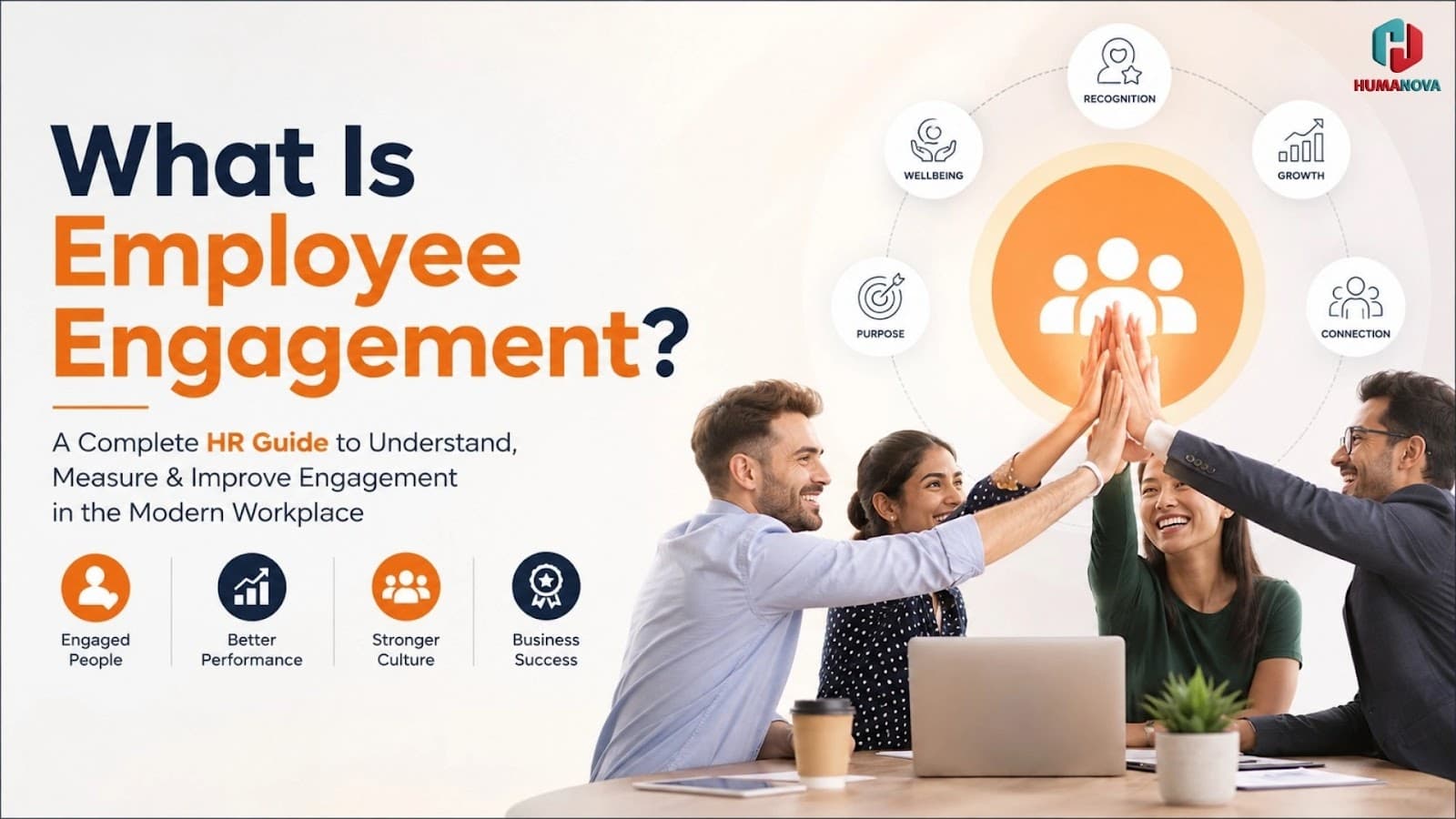
Employee engagement is no longer just an HR initiative, it has become a business priority. Organizations with engaged employees often experience stronger collaboration, better productivity, lower turnover, and improved customer satisfaction. On the other hand, disengaged employees can negatively impact workplace culture, team performance, and overall business growth.
Simply offering competitive salaries or attractive benefits is not enough to build an engaged workforce. Employees want to feel valued, heard, supported, and connected to the organization's purpose. They also expect opportunities to grow, receive meaningful feedback, and maintain a healthy work-life balance.
In this guide, you'll learn what employee engagement means, why it matters, how it differs from employee satisfaction, and practical strategies HR leaders can use to create a more engaged workforce. You'll also discover how a modern Corporate Wellness Platform like Humanova can help organizations improve engagement through continuous wellbeing tracking, workforce insights, coaching, and AI-powered recommendations.
What Is Employee Engagement?
Employee engagement is the emotional commitment, motivation, and connection employees have toward their work, their team, and their organization. Engaged employees care about the company's success and consistently contribute their best efforts.
Employee engagement goes beyond simply completing daily tasks. It reflects how invested employees are in achieving business goals while feeling motivated, appreciated, and supported at work.
An engaged employee is more likely to:
- Take ownership of responsibilities.
- Collaborate effectively with colleagues.
- Suggest new ideas and improvements.
- Deliver higher-quality work.
- Stay committed to the organization.
Employee engagement is closely connected to employee wellbeing in the workplace. When employees feel mentally, emotionally, and professionally supported, they are more likely to remain engaged and productive.
Why Employee Engagement Matters
Employee engagement directly influences business performance. When employees feel connected to their work, they are more motivated to contribute, solve problems, and collaborate effectively.
Organizations that invest in engagement often experience improvements across several areas.
Higher Productivity
Engaged employees are more focused, proactive, and committed to delivering quality work. They spend less time disengaged and more time contributing to business objectives.
Better Employee Wellbeing
The importance of employee wellbeing cannot be separated from engagement. Employees who experience lower stress levels, supportive leadership, and healthy work environments are more likely to stay engaged over the long term.
Organizations can strengthen wellbeing through initiatives such as Workplace Wellbeing Tracking, helping HR teams identify burnout risks and respond proactively.
Lower Employee Turnover
Replacing employees is expensive and time-consuming. Strong engagement helps improve retention by creating an environment where employees feel valued, recognized, and motivated to stay.
Improved Workplace Culture
Engaged employees contribute to a positive workplace culture built on trust, collaboration, communication, and shared purpose.
Stronger Business Performance
Companies with highly engaged employees are better equipped to innovate, adapt to change, and achieve long-term business goals.
Key Elements of Employee Engagement
Building engagement requires a combination of leadership, communication, employee wellbeing, and career development.
Clear Communication
Employees should understand company goals, expectations, and how their work contributes to organizational success.
Recognition and Appreciation
Recognizing employee achievements boosts motivation and reinforces positive behaviors.
Career Growth
Learning opportunities, coaching, and professional development help employees feel invested in their future.
Humanova's Learning & Capability Support enables organizations to provide personalized learning journeys that encourage continuous development.
Employee Wellbeing
Employees perform at their best when they are physically and mentally healthy. Supporting employee wellbeing in the workplace through wellbeing initiatives creates a more engaged workforce.
Leadership Support
Managers play a significant role in employee engagement by providing guidance, regular feedback, and coaching.
Organizations can strengthen manager-employee relationships through Employee Coaching & 1:1 Support, helping leaders create meaningful conversations and personalized development plans.
Benefits of Employee Engagement
Investing in employee engagement creates value for both employees and organizations.
For Employees For Organizations
Better wellbeing Higher productivity
Greater job satisfaction Lower turnover
Career development Improved retention
Better collaboration Stronger workplace culture
Increased motivation Better customer experience
Reduced stress Higher business performance
How Employee Engagement Works
Employee engagement develops through continuous listening, meaningful action, and consistent support.
A successful engagement strategy typically follows these steps:
Transform your workforce wellbeing today
Interested in learning how Humanova can elevate your team's wellness and HR metrics? Connect with our team for a personalized walkthrough.
- Understand employee needs through surveys and wellbeing insights.
- Identify engagement trends and workplace challenges.
- Develop action plans based on employee feedback.
- Provide coaching, learning opportunities, and wellbeing support.
- Measure engagement regularly and adjust strategies.
Organizations can simplify this process using Employee Engagement Analytics, which helps HR teams track participation, identify trends, and make data-driven decisions.
Additionally, HR Analytics & Workforce Insights provide managers with dashboards that connect engagement data to workforce performance, enabling more informed HR strategies.
How to Improve Employee Engagement
HR leaders can strengthen engagement by focusing on practical, employee-centered initiatives.
- Create open communication channels.
- Recognize employee achievements regularly.
- Encourage manager-employee check-ins.
- Invest in employee wellbeing programs.
- Offer learning and career development opportunities.
- Collect employee feedback consistently.
- Use workforce analytics to measure engagement.
- Address burnout before it impacts performance.
AI-powered tools can further enhance these efforts. Humanova's AI-Based Recommendations analyze workplace trends and provide personalized suggestions that help HR teams improve engagement and employee wellbeing.
Best Practices for HR Teams
To build lasting engagement, HR teams should:
- Listen to employee feedback regularly.
- Turn survey insights into measurable actions.
- Support flexible and healthy work environments.
- Equip managers with coaching skills.
- Celebrate employee achievements.
- Track engagement using meaningful metrics.
- Combine wellbeing, learning, and analytics into one integrated strategy rather than treating them as separate initiatives.
These practices help create a workplace where employees feel valued, supported, and motivated to perform at their best.
Common Employee Engagement Challenges
Even organizations with strong HR teams can face challenges when trying to improve employee engagement. Recognizing these obstacles early allows leaders to take meaningful action before they affect morale and performance.
1. Poor Communication
When employees don't understand company goals, role expectations, or organizational changes, they can feel disconnected from the business. Regular communication and transparent leadership help build trust and strengthen engagement.
2. Employee Burnout
Heavy workloads, unrealistic deadlines, and poor work-life balance can quickly reduce motivation. Burnout affects both productivity and employee wellbeing in the workplace. Monitoring wellbeing regularly through Workplace Wellbeing Tracking helps HR teams identify early warning signs and provide timely support.
3. Limited Career Growth
Employees are more likely to disengage when they don't see opportunities to learn or advance. Investing in continuous development through Learning & Capability Support encourages employees to build new skills and stay motivated.
4. Lack of Recognition
Employees want their contributions to be appreciated. A simple "thank you," public recognition, or career development opportunity can significantly improve engagement and job satisfaction.
5. Ignoring Employee Feedback
Collecting feedback without taking action can reduce trust. HR teams should regularly review employee insights and implement improvements based on common concerns. Tools like Employee Engagement Analytics make it easier to identify trends and measure the impact of engagement initiatives.
Common Mistakes HR Teams Should Avoid
Avoiding these common mistakes can make engagement initiatives more successful.
- Treating engagement as an annual survey instead of an ongoing process.
- Focusing only on salary and benefits while ignoring workplace culture.
- Using the same engagement strategy for every team.
- Overlooking manager training and leadership development.
- Ignoring employee wellbeing and mental health.
- Failing to measure engagement outcomes with data.
- Collecting employee feedback but not acting on it.
Employee engagement is built through consistent actions, not one-time initiatives.
Expert Tips to Improve Employee Engagement
HR professionals can create lasting engagement by following these practical recommendations:
- Conduct regular pulse surveys instead of relying only on annual engagement surveys.
- Encourage managers to schedule meaningful one-on-one conversations.
- Recognize employee achievements frequently.
- Support flexible work arrangements where appropriate.
- Invest in learning and career development programs.
- Use workforce data to identify engagement trends.
- Prioritize employee wellbeing as part of everyday business operations.
- Review engagement metrics regularly and adjust strategies based on employee feedback.
Organizations that combine engagement, wellbeing, coaching, learning, and analytics are better positioned to build resilient, high-performing teams.
Employee Engagement: Traditional vs. Data-Driven Approach
Traditional Approach Modern Data-Driven Approach
Annual engagement surveys Continuous feedback and pulse surveys
Reactive HR decisions Proactive workforce insights
Manual reporting Real-time HR dashboards
Generic engagement initiatives Personalized employee experiences
Limited visibility into trends AI-powered recommendations and analytics
Separate HR systems Integrated employee wellbeing, learning, coaching, and analytics
Key Takeaways
- Employee engagement reflects an employee's emotional commitment to their work and organization.
- Engagement directly influences productivity, retention, collaboration, and workplace culture.
- The importance of employee wellbeing should be part of every engagement strategy.
- Regular feedback, coaching, recognition, and learning opportunities improve engagement over time.
- Data-driven HR tools help organizations measure engagement and make informed decisions.
- Employee engagement is an ongoing journey that requires continuous listening, action, and improvement.
Frequently Asked Questions
1. What is employee engagement?
Employee engagement is the emotional commitment employees have toward their work, their team, and their organization. Engaged employees are motivated, productive, and committed to helping the business succeed.
2. Why is employee engagement important?
Employee engagement improves productivity, employee retention, workplace culture, collaboration, and business performance while supporting long-term organizational growth.
3. How is employee engagement different from employee satisfaction?
Employee satisfaction measures how happy employees are with their job, while employee engagement reflects how emotionally invested they are in contributing to organizational success. An employee may be satisfied but not fully engaged.
4. What factors influence employee engagement?
Leadership, communication, recognition, career development, workplace culture, employee wellbeing, and opportunities for learning all contribute to employee engagement.
5. How can HR measure employee engagement?
HR teams can measure engagement using pulse surveys, employee feedback, participation rates, retention metrics, absenteeism, performance data, and workforce analytics dashboards.
6. How does employee wellbeing affect engagement?
Employees who feel mentally, emotionally, and physically supported are more likely to stay motivated, productive, and engaged. Improving employee wellbeing in the workplace strengthens long-term engagement and reduces burnout.
7. How can technology improve employee engagement?
Modern HR platforms use analytics, wellbeing tracking, AI recommendations, coaching tools, and learning management features to help HR teams understand employee needs and improve engagement strategies.
8. Is employee engagement important for small businesses?
Yes. Businesses of every size benefit from engaged employees. Higher engagement leads to better teamwork, improved customer experiences, increased productivity, and stronger employee retention.
Conclusion
Employee engagement is more than an HR metric—it reflects the strength of your workplace culture and your organization's ability to support its people. Employees who feel valued, heard, and empowered are more likely to stay committed, perform at a higher level, and contribute to long-term business success.
Building engagement requires more than annual surveys. It involves listening to employees, supporting their wellbeing, investing in learning, providing meaningful coaching, and using workforce insights to make informed decisions.
Humanova brings these capabilities together through its Corporate Wellness Platform, helping organizations improve engagement with Employee Engagement Analytics, Workplace Wellbeing Tracking, Employee Coaching & 1:1 Support, Learning & Capability Support, HR Analytics & Workforce Insights, and AI-Based Recommendations. By taking a proactive and data-driven approach, HR teams can create healthier workplaces where employees and organizations grow together.