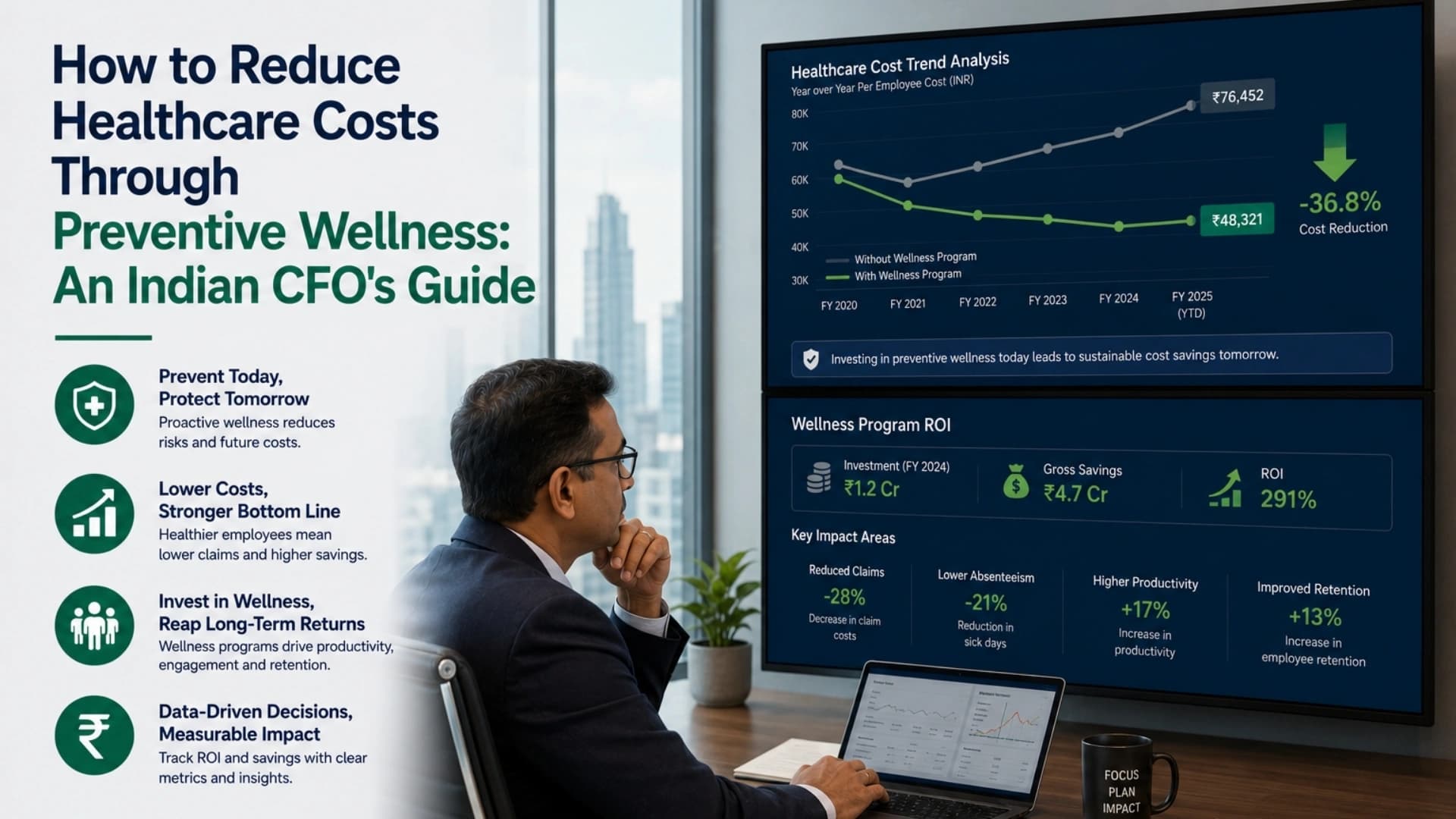
A CFO-level breakdown of how preventive wellness bends the group insurance cost curve over a three-year horizon.
What Is Preventive Wellness as a Healthcare Cost Lever?
Preventive wellness, in this context, means structured health interventions designed to reduce claims frequency and severity over time, rather than a generic engagement perk. For CFOs, it is one of the few available levers to bend the rising group insurance cost curve, with both immediate and compounding long-term effects.
Group health insurance premiums in India have increased an average of 14% annually for the past five years, according to IRDA data, making this trajectory unsustainable for organizations where insurance is a significant people cost.
Why This Matters Now to Finance Leaders
Group health insurance premiums in India are primarily driven by claims experience. Insurers analyze your organization's three-year rolling claims history to determine renewal pricing, which means today's health interventions directly shape tomorrow's premium negotiations.
- High claims frequency, high claims severity, and specific condition categories, metabolic diseases, cardiovascular events, mental health hospitalizations, all push premiums upward.
- Organizations with the most mature preventive wellness programs consistently report the best group insurance renewal experiences.
Examples: High-Impact Interventions for Cost Reduction
The interventions with the strongest evidence for reducing healthcare claims in Indian corporate populations:
- Diabetes and pre-diabetes management programs, highest claims cost and highest prevalence in Indian corporate populations.
- Hypertension detection and management, frequently undetected and highly costly when it leads to cardiovascular events.
- Mental health access reduces emergency and hospitalization claims associated with acute mental health crises.
- Musculoskeletal health programs reduce high-frequency lower-cost claims that drive administrative overhead and premium calculations.
Year-One vs Year-Three Impact: A Comparison
Year one: direct healthcare cost savings are modest because chronic disease development and intervention operate on a 12 to 24-month lag. Primary year-one savings comes from absenteeism reduction and productivity improvement, not insurance premiums.
Year three: insurance renewal negotiations shift in the organization's favor. A demonstrated claims reduction trend of 8% over 24 months typically yields renewal premium reductions of 5 to 9% on a base that may be Rs 50 to Rs 200 lakh for a large organization, this is a material financial event.
How to Use the Three-Year Cost Reduction Model
Year one: build the foundation
Expect modest direct healthcare savings, since chronic disease intervention takes time to show in claims data. Focus measurement on absenteeism reduction and productivity improvement instead.
Year two: track early claims movement
Early-stage chronic disease management, pre-diabetes, early hypertension, begins showing in claims data. Organizations typically see a 6 to 10% reduction in claims frequency per head.
Year three: bring the data into renewal negotiations
Use your demonstrated claims reduction trend as leverage in insurance renewal talks, where an 8% reduction over 24 months typically yields a 5 to 9% premium reduction.
Transform your workforce wellbeing today
Interested in learning how Humanova can elevate your team's wellness and HR metrics? Connect with our team for a personalized walkthrough.
Throughout: work proactively with your insurer
Proactive disclosure of your wellness program to your group health insurer has financial value. Many major insurers in India, Star Health, United India, New India, offer wellness partnership programs that provide premium discounts for organizations with documented wellness interventions and improving health metrics.
- Ask your broker to negotiate wellness program credits as part of your renewal.
- Consider sharing anonymized aggregate health data from your wellness program in exchange for premium considerations.
Benefits of a Preventive, Cost-Focused Wellness Strategy
- A real lever to bend an otherwise unsustainable 14% annual premium growth trend.
- Compounding savings, productivity gains in year one, claims reduction in year two, and premium relief in year three.
- Negotiating leverage with insurers backed by your own claims trend data.
- Targeted interventions, like diabetes and hypertension management, that address the highest-cost claims categories directly.
What's Next for CFOs Evaluating Wellness ROI
As more Indian insurers formalize wellness partnership programs, expect premium discounts tied to documented interventions to become a standard renewal negotiation lever rather than an exception, making it increasingly important for CFOs to start tracking claims trend data now, well ahead of the renewal conversations where that data pays off.
Conclusion
Healthcare cost reduction through preventive wellness is a three-year project, not a one-year intervention. CFOs who evaluate wellness programs on year-one healthcare savings alone will consistently undervalue the investment. The real financial case is built on the three-year claim’s trajectory and its impact on insurance renewal, and the organizations that started three years ago are realizing those savings now.
FAQs
1. How quickly do wellness programs reduce healthcare costs?
Not immediately. Year one savings mostly come from absenteeism and productivity, not insurance claims, since chronic disease intervention effects take 12 to 24 months to appear in claims data.
2. What drives group health insurance premiums in India?
Claims experience over a three-year rolling history, including claims frequency, severity, and specific high-cost condition categories like metabolic and cardiovascular conditions.
3. Which health conditions offer the biggest cost-reduction opportunity?
Diabetes and pre-diabetes management, given their high claims cost and prevalence in Indian corporate populations, followed by hypertension, mental health access, and musculoskeletal health.
4. Can wellness program data lower insurance premiums?
Yes. Many major Indian insurers offer wellness partnership discounts for organizations with documented interventions and improving health metrics, and a demonstrated 8% claims reduction over 24 months typically yields a 5 to 9% premium reduction at renewal.