Introduction
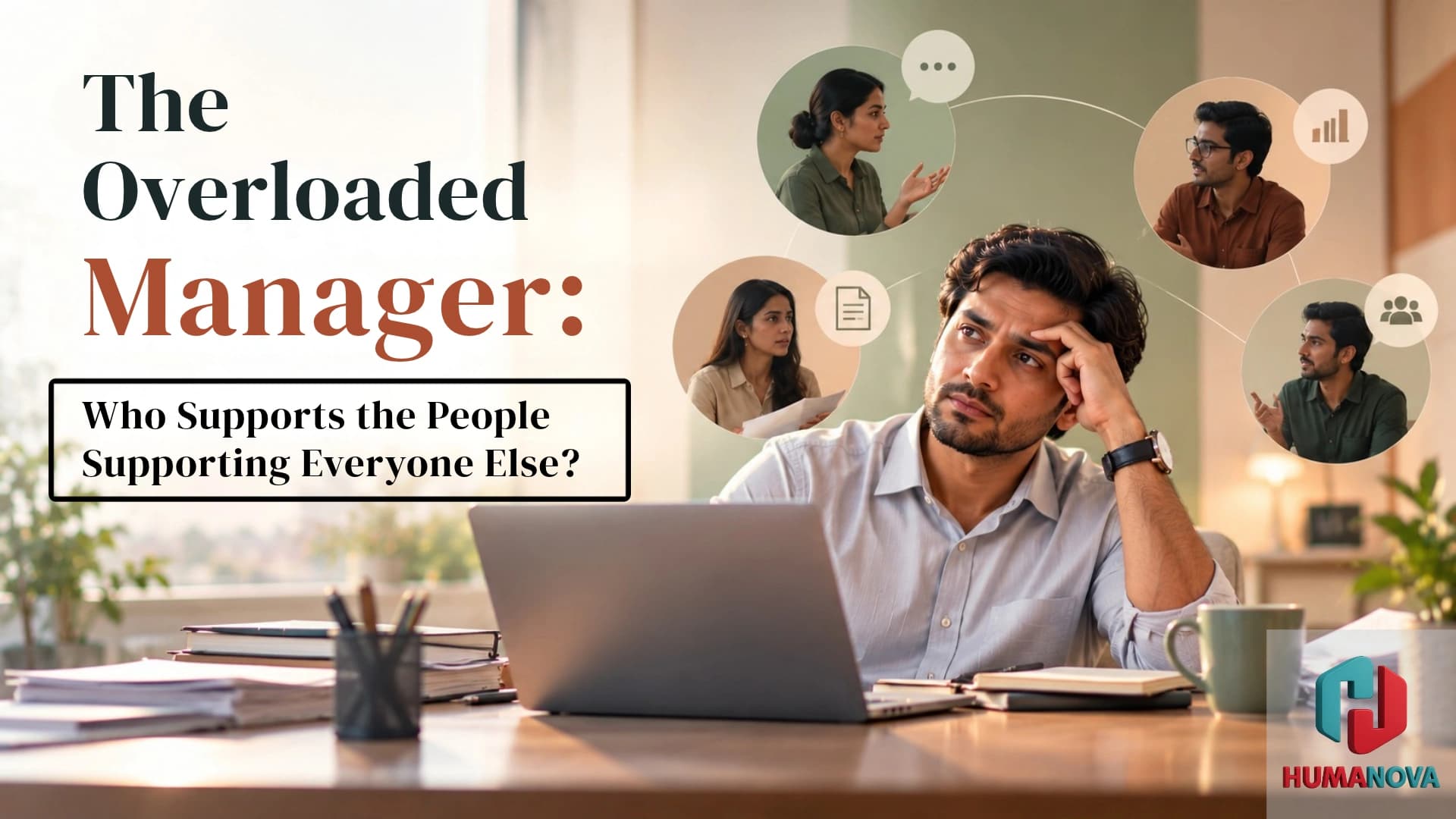
A manager starts the day by reviewing team priorities and answering questions about a new AI tool. One employee wants clarity about a changing role. Another needs support after a difficult customer interaction. A third is struggling with workload.
Between those conversations, the manager has targets to meet, reports to complete and meetings with senior leaders. Their team has been told to do more with fewer resources, but the manager has limited authority to change deadlines or staffing.
By evening, they have spent most of the day supporting other people. Their own work begins when the meetings end.
This is the reality behind the need for manager wellbeing support. Organisations ask managers to protect employee wellbeing, build engagement, manage performance, communicate change and sustain productivity. Yet managers are often given little time or support to manage their own workload.
Annual surveys and optional wellness sessions will not solve this problem. Managers may be among the least likely employees to admit that they are struggling. They are expected to remain composed for their teams and may worry that asking for help will make them appear unable to lead.
Supporting managers requires more than teaching them how to support employees. It means reviewing the design of the management role itself: workload, team size, decision-making authority, administrative demands, role clarity and access to confidential support.
If organisations want managers to care for their teams, they must create conditions in which managers can do that work sustainably.
Why manager wellbeing support matters now
The manager’s role has expanded.
Managers are expected to coordinate hybrid teams, support employee mental health, manage performance, handle conflict and communicate organisational change. They may also be introducing AI tools, helping employees learn new skills and answering questions about how technology could affect jobs.
At the same time, many managers remain individual contributors. They carry delivery targets alongside their people responsibilities.
This creates a structural conflict. Supporting employees takes time, but the work is often treated as an additional responsibility rather than a core part of the manager’s role.
Gallup’s State of the Global Workplace 2025 reported that managers experienced the largest decline in wellbeing among employee groups covered by the research. Gallup also noted that manager burnout can affect performance, absence and turnover, with consequences for the employees they lead. Gallup
More recent Gallup workplace data also show that global manager engagement fell from 31% in 2022 to 22% in 2025. Gallup State of the Global Workplace 2026
These findings matter because managers shape much of the everyday employee experience. They clarify priorities, allocate work, give feedback, respond to concerns and decide whether a team member feels heard.
An overloaded manager may have less capacity to hold meaningful one-to-one conversations, notice changes in behaviour or resolve unnecessary work. They may become slower to make decisions or communicate less clearly. This does not necessarily mean they are a poor manager. They may be operating in a poorly designed role.
Manager wellbeing is connected to several HR priorities:
- Employee engagement
- Retention and internal mobility
- Psychological safety
- Performance management
- Organisational change
- AI readiness
- Leadership development
- Workplace mental health
- Team productivity
The question is not only whether managers are capable. It is whether the organisation gives them enough time, authority and support to use that capability.
Understanding manager overload
Manager overload occurs when the demands of managing people and delivering work repeatedly exceed the time, resources or authority available.
It can include:
- Too many direct reports
- Excessive meetings and administrative work
- Conflicting priorities from senior leaders
- Responsibility without decision-making authority
- Pressure to absorb team concerns without support
- Inadequate training for difficult conversations
- Constant availability across office and remote channels
- Personal targets that compete with management responsibilities
- Repeated organisational change
- Unclear escalation routes
- Responsibility for implementing new technology without adequate preparation
A busy week is not the same as chronic overload. Management roles naturally include difficult periods. The concern is when excessive demand becomes the normal way of working and recovery never arrives.
It is also important to make careful distinctions.
Stress or fatigue does not prove that a manager has a mental health condition. Burnout cannot be identified from a dashboard, survey score or productivity pattern. A manager may be affected by workload, poor role clarity, workplace conflict, personal circumstances or a combination of factors.
HR should not label or diagnose managers. It should examine the working conditions that may be contributing to the problem and provide access to qualified professional support where appropriate.
The World Health Organization identifies excessive workloads, low control, unclear roles, job insecurity and limited support as risks to mental health at work. WHO recommends organisational interventions that address working conditions, alongside manager training and individual support. World Health Organization
That guidance applies to managers too. They are employees, even when their role requires them to represent the organisation.
Aggregated data may reveal recurring problems across management levels. It should start a conversation, not create an individual risk label.
What organisations often get wrong
Training managers without changing their workload
A manager may attend training on psychological safety, coaching and supportive conversations. Then they return to ten meetings, urgent approvals and a team that is too large to support properly.
Training can improve skill. It cannot create time.
Before adding another manager-development programme, review whether managers have enough capacity to apply what they are learning.
Treating managers as the solution to every people problem
Managers are often the delivery channel for each new HR priority.
They introduce policies, explain benefits, run engagement activities, support wellbeing, manage conflict and encourage learning. When a new programme struggles, organisations may respond by asking managers to promote it more actively.
This creates an ever-growing list of responsibilities. HR should decide what managers genuinely need to own, what specialists should handle and what can be simplified.
Assuming seniority protects people from burnout
A manager may have greater influence than an individual contributor, but that does not mean they control staffing, budgets or deadlines.
Managers are often caught between leadership expectations and team needs. They must communicate decisions they did not make and respond to reactions they cannot resolve.
The emotional demands of that position are easy to overlook.
Expecting managers to act as therapists
Managers should be able to listen, respond respectfully and guide employees towards appropriate support. They should not diagnose mental health conditions or provide counselling.
When organisations fail to define this boundary, managers may feel personally responsible for concerns that require HR, clinical or safeguarding expertise.
Clear escalation routes protect both the employee and the manager.
Measuring team wellbeing but ignoring manager experience
An organisation may ask managers to review engagement results and prepare action plans without examining the pressure those managers are under.
Team feedback matters, but it should not be used only to judge the manager. It may also reveal staffing problems, unclear strategy or policies outside the manager’s control.
Manager feedback needs its own confidential route. Otherwise, leaders may receive a filtered account of what is happening.
What HR leaders and managers can do now
1. Review the design of management roles
Map what managers are expected to do in a typical month.
Include employee conversations, recruitment, reporting, approvals, project delivery, performance management, learning, compliance and change communication. Compare these expectations with the time managers actually have.
Ask:
- How many direct reports does each manager support?
- How complex are the roles and employee needs within the team?
- Which administrative tasks can be simplified?
- Which meetings require the manager’s attendance?
- What individual delivery targets do managers carry?
- Which decisions can managers make without further approval?
- Which responsibilities belong with HR or another specialist?
Span of control should not be assessed by headcount alone. A newly formed team, a distributed workforce or a group experiencing significant change may require more management time.
Remove or redesign work before adding another expectation.
2. Give managers regular support from their own managers
Managers need one-to-one conversations that are not limited to operational performance.
Transform your workforce wellbeing today
Interested in learning how Humanova can elevate your team's wellness and HR metrics? Connect with our team for a personalized walkthrough.
Their managers should discuss workload, competing priorities, team challenges, decision-making barriers and development needs.
Useful questions include:
- Which part of the role is taking more time than expected?
- Where are you carrying responsibility without enough authority?
- Which team issue needs additional HR or leadership support?
- What can be delayed, reassigned or stopped?
- Where do you need clearer direction from me?
- Are you able to disconnect outside agreed working hours?
The conversation must lead to action. Listening without changing anything can make the manager feel even more responsible for solving the problem alone.
3. Define the manager’s role in employee mental health
Managers need a clear, realistic framework.
They should know how to:
- Create a private space for conversation
- Listen without making assumptions
- Ask about workplace factors
- Discuss reasonable adjustments through the correct process
- Explain confidential support options
- Respond to urgent concerns
- Escalate safeguarding or serious risk issues
- Record only appropriate workplace information
- Protect privacy within legal and organisational limits
Training should state equally clearly what managers should not do. They are not expected to diagnose, treat or investigate an employee’s health.
WHO’s mental-health-at-work guidance recommends manager training in open communication, active listening and understanding workplace stressors. It does not position managers as healthcare providers. WHO Guidelines on Mental Health at Work
4. Build protected time for people management
If employee support is important, organisations must allocate time for it.
Managers need protected space for one-to-one meetings, workload reviews, feedback and their own development. These activities should not be squeezed between operational tasks or completed after hours.
Review recurring meetings and reporting requirements. Reduce duplicate updates. Give managers tools and templates only when they save time rather than adding documentation.
During major change, temporarily adjust delivery expectations. A manager introducing a new structure or AI-enabled workflow cannot reasonably maintain every old target while doing the change work well.
Microsoft’s 2026 Work Trend Index found that manager support and psychological safety were associated with stronger employee AI readiness and value. Managers who are expected to create that environment need space to learn and lead the transition themselves. Microsoft Work Trend Index
5. Provide confidential coaching and professional support
Managers may hesitate to use the same channels they recommend to employees. They may worry about confidentiality, reputation or what participation implies about their capability.
Explain support options clearly. State what is confidential, what information is reported in aggregate and what managers or senior leaders cannot see.
Coaching can help managers work through role boundaries, difficult conversations and competing priorities. Professional wellbeing or mental health support should also be available when appropriate.
Peer groups can reduce isolation, provided they are well facilitated and do not become another meeting where managers are expected to solve organisational problems without authority.
Support should be easy to access across locations and working patterns, including for managers in smaller offices or distributed teams.
The role of technology
A workplace wellbeing platform can make support more accessible to managers who have limited time or work across different locations.
Useful features may include:
- Confidential access to professional support
- Virtual one-to-one sessions
- Manager coaching
- Facilitated group programmes
- Voluntary wellbeing check-ins
- Anonymous feedback
- Self-reflection tools
- Practical conversation guides
- Leadership and learning resources
- Aggregated workforce-level insights
Technology can give managers one place to find help instead of asking them to navigate several disconnected programmes.
It can also help HR identify broad themes. If managers across several teams report unclear priorities, growing spans of control or difficulties leading organisational change, leaders have a reason to examine the system around them.
Privacy is essential. Managers should understand what information is collected, who can access it and how it will be used. Individual support information should not appear in performance reports.
Technology should not monitor communication patterns to infer whether a manager is stressed or burned out. It should not assign hidden wellbeing scores or turn confidential participation into evidence about leadership potential.
A platform can improve access. It cannot fix an unmanageable role, poor senior leadership or a culture that rewards constant availability.
How Humanova supports a more connected approach
Humanova can help organisations bring confidential wellbeing support, coaching, employee feedback, leadership development, learning resources and privacy-conscious workforce insights into a connected experience.
A manager preparing for a sensitive employee conversation may need practical guidance. Another may benefit from confidential coaching about workload, boundaries or a difficult team situation. HR may need aggregated insight into themes affecting managers without gaining access to anyone’s private support information.
Humanova can also help organisations connect manager development with employee listening. For example, recurring feedback about role clarity or change communication may inform future manager resources and wider organisational action.
This support does not replace HR, senior leaders, counsellors, psychologists, healthcare providers or an employee assistance programme. Nor does it remove the organisation’s responsibility to review workloads, reporting lines, decision authority and management expectations.
How to measure whether manager support is working
Do not measure manager wellbeing support only through course completion or platform registrations.
Look at the conditions managers experience and their ability to lead sustainably:
- Perceived workload manageability
- Number and complexity of direct reports
- Time available for one-to-one conversations
- Role clarity
- Decision-making authority
- Support from the manager’s own manager
- Confidence handling sensitive conversations
- Awareness and trust in confidential support
- Participation in coaching or learning
- Ability to disconnect outside agreed working hours
- Recurring themes from manager feedback
- Manager engagement patterns
- Manager absence and attrition
- Team engagement and retention, interpreted alongside wider context
CIPD’s 2025 health and wellbeing research identified high workload as a leading challenge and continued to emphasise line-manager capability within organisational wellbeing. CIPD
Avoid treating a struggling team score as proof that an individual manager has failed. Consider staffing, senior leadership decisions, organisational change and the resources available to the manager.
Use qualitative feedback. Ask managers what prevents them from supporting their teams, which processes consume unnecessary time and where escalation breaks down.
Then show what changed. If manager feedback leads to fewer reports, clearer escalation routes or revised team structures, communicate that connection.
FAQs
1. What is manager wellbeing support?
Manager wellbeing support is the practical and confidential help managers receive to perform their roles sustainably. It includes manageable workloads, clear authority, support from senior leaders, development, coaching and access to professional wellbeing resources. It also means giving managers enough time for people management and ensuring they are not expected to handle complex employee concerns without specialist guidance.
2. Why are managers at risk of overload?
Managers often carry operational targets alongside responsibility for employee performance, engagement, wellbeing and development. They may manage organisational change, hybrid teams and new technology without extra time or authority. Managers also absorb concerns from employees while communicating decisions from senior leaders. When these demands become chronic, the role can become difficult to sustain.
3. How does manager wellbeing affect employees?
Managers influence priorities, workload, feedback, recognition and psychological safety. When managers have enough capacity and support, they are better placed to communicate clearly and respond to employee concerns. An overloaded manager may become less available or slower to make decisions. This does not automatically indicate poor leadership; it may reveal a problem with role design or organisational resources.
4. Should managers support employee mental health?
Managers should create respectful working conditions, listen to concerns, discuss workplace factors and direct employees to appropriate support. They should understand escalation and emergency procedures. They should not diagnose conditions or act as therapists. Organisations must provide training, clear boundaries and access to HR, safeguarding professionals and qualified care where appropriate.
5. How can HR identify manager overload?
HR can use confidential surveys, manager focus groups, workload reviews and discussions about spans of control. Operational indicators such as meeting load, vacancies, overtime, absence and manager turnover may provide additional context. No single measure proves that a manager is overloaded. HR should combine workforce patterns with direct conversations and avoid identifying individuals through small-group reporting.
6. What should organisations include in manager training?
Manager training should cover role clarity, workload conversations, feedback, psychological safety, change communication and appropriate responses to sensitive concerns. Managers also need practice setting boundaries and escalating issues they cannot resolve. Training should be role-based and supported by coaching or follow-up. It will have limited effect if managers lack time or authority to use what they learn.
7. Can coaching help overloaded managers?
Coaching can give managers a confidential space to examine priorities, boundaries, difficult conversations and leadership habits. It may help them make better use of the authority they have. Coaching cannot compensate for chronic understaffing, unreasonable targets or unclear organisational decisions. HR should use it alongside work-design changes and senior-leader accountability.
8. How should organisations measure manager wellbeing?
Measure factors the organisation can influence: workload, role clarity, span of control, decision authority, support from senior leaders and access to confidential help. Review engagement, absence and attrition patterns carefully, supported by qualitative feedback. Do not attempt to diagnose burnout from a score. The aim is to identify where the management system needs attention.
Featured snippet
Organisations can support overloaded managers by reviewing workloads and spans of control, clarifying decision authority, protecting time for people management and providing coaching and confidential professional support. Managers should be trained to hold supportive conversations, but they should not be expected to act as therapists or solve structural problems alone.
Conclusion
Manager wellbeing support cannot consist only of asking managers to care for themselves. Organisations must examine the role they have created.
Managers need realistic workloads, clear priorities, appropriate authority and support from their own leaders. They need time to listen to employees, develop their teams and learn new ways of working. They also need confidential help that they can use without fear of judgement.
When managers are supported, employees are more likely to receive clear communication, thoughtful feedback and timely action on avoidable workplace stress. When managers are overloaded, the effects rarely stay with the manager alone.
Employees are more likely to thrive when organisations listen responsibly, equip managers and treat wellbeing as part of how work is designed.
Explore how Humanova can help your organisation make employee wellbeing, coaching, feedback, and workforce insight easier to access.