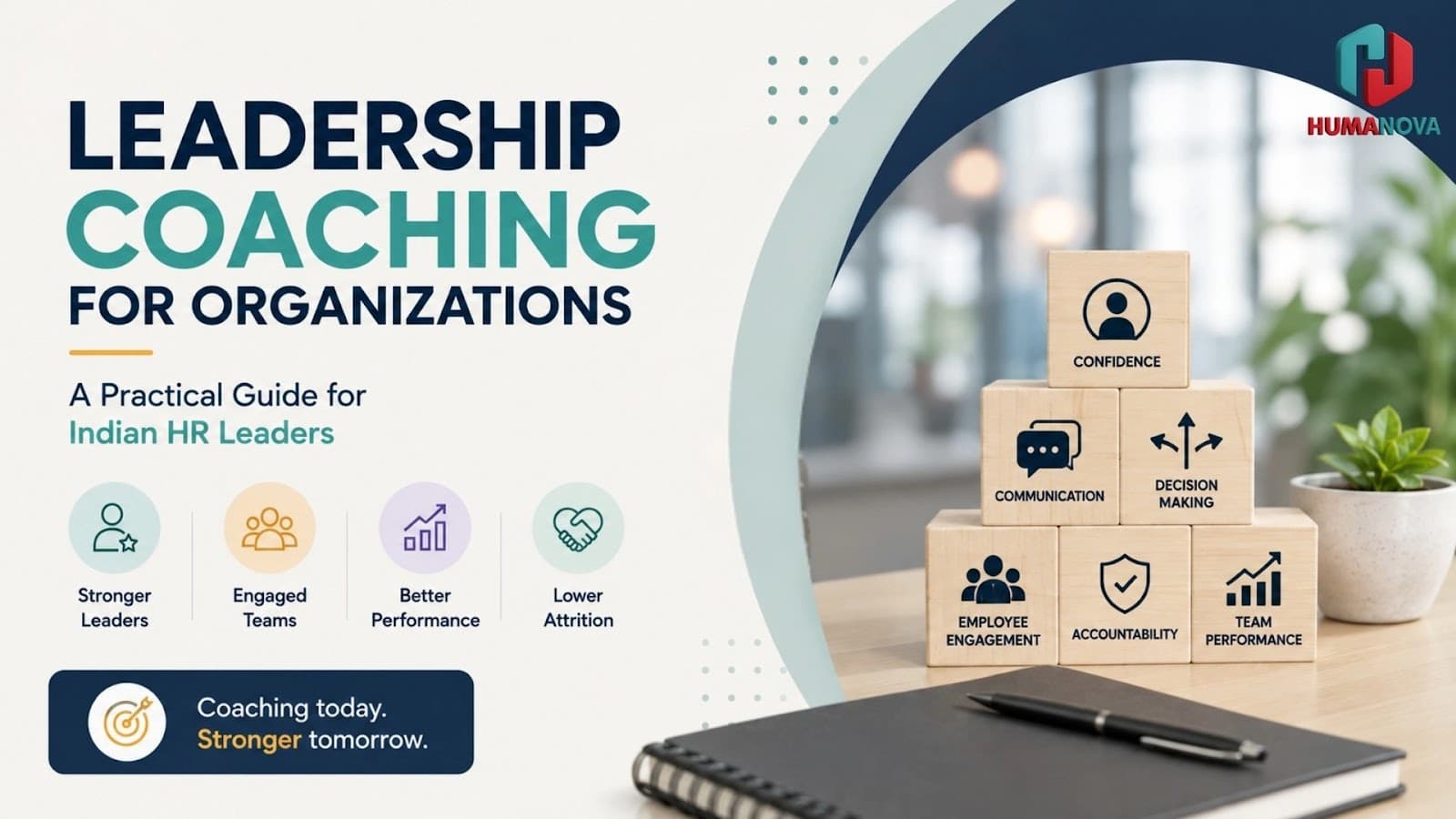
Leadership coaching for organizations is an ongoing, structured process in which supervised coaches work with managers to improve decision-making ability, communication and people skills. More than a workshop that lasts a few hours, it is tailored to the specific gaps of people leaders and measured against real-world results, team retention & engagement scores as well as performance metrics, making one of the best bet returns available to HR teams today.
What Leadership Coaching for Organizations Actually Means
Leadership coaching is a structured process of interaction between a manager (or executive) and a trained coach that takes place over a period of weeks and months, and engages with real-life situations as they occur rather than theoretical lessons taught in class. The most effective programs combine 1:1 coaching with 360 degree feedback and/or tracking of competency accelerated tasks like delegation or conflict.
This is what separates coaching from training. Training delivers the same content to everyone. Coaching diagnoses what one specific leader needs and builds a plan around it.
Why This Matters More in India Right Now
Attrition remains one of the most persistent cost centers for Indian companies. India's overall attrition rate has hovered around 16–17% in recent years, with sectors like IT and e-commerce running as high as 25–29%. Replacing a single mid-level employee, once recruiting, onboarding, and lost productivity are counted, can easily cost several lakhs.
This is driven by a host of factors, one of which is manager quality. Poor work performance of supervisors is often one of the root causes employees resign from their jobs in India, with exit-interviews data from multiple industries indicating that the supervisor relationship is the true cause of many resignations that appear on the surface to be due to other factors. Despite this, most first time managers don't receive formal training, and they are often promoted for technical skill and not their people leadership.
The Shift from Reactive to Proactive Coaching
Coaching used to be reserved for underperforming managers as a last step before a difficult conversation. That's changing. More organizations now offer coaching proactively, to new managers in their first 90 days and to high-potential employees preparing for their first leadership role, rather than waiting until problems are visible.
What a Strong Coaching Program Includes
Assessment Before Coaching Begins
Every effective program starts with a baseline, a skills assessment or 360-degree feedback round, so both the coach and the organization know exactly which behaviors need to shift, and have something to measure progress against later.
A Regular Cadence, Not a One-Off Session
Coaching is a rhythm, not an event. The majority of programs are bi-weekly or monthly programs lasting three to twelve months, allowing space for leaders to rehearse new skills between the sessions and to incorporate actual scenarios into discussions.
Visibility for HR Without Breaking Trust
For coaching to scale across an organization, HR needs to know which teams are struggling, without seeing individual employees' private feedback. Most legacy programs get this balance wrong, either withholding useful data or exposing too much and eroding trust.
Humanova is built to close exactly this gap, giving HR leaders anonymized mood tracking and manager dashboards that flag which teams may need coaching support, without ever exposing any individual employee's specific responses.
A Confidential Outlet for Leaders Themselves
Managers carry pressure that's often invisible to their own teams. Programs paired with a confidential channel, like anonymous counselor chat, tend to see leaders open up more honestly, because the conversation isn't tied to their performance review.
Measuring Whether Coaching Is Working
HR leaders are increasingly expected to justify coaching spend with numbers, not just satisfaction scores. The strongest programs track a consistent, small set of metrics:
- Team retention under the coached manager, compared to the prior 6–12 months
- Engagement scores for the manager's direct reports
- Shifts in 360-degree feedback on specific competencies
- Internal mobility and promotion rates among coached leaders
Individualized coaching, where the plan is built around a specific leader's actual gaps, tends to show meaningfully stronger competency improvement in pre- and post-assessments compared to standardized training delivered to everyone equally.
Mistakes Organizations Should Avoid
Treating coaching as a one-time event. A few sessions rarely shift deep habits. Programs need a minimum of three months to show real behavior change.
Coaching only struggling managers. This frames coaching as a punishment and discourages participation. High performers often benefit just as much, sometimes more, because they act on feedback faster.
Transform your workforce wellbeing today
Interested in learning how Humanova can elevate your team's wellness and HR metrics? Connect with our team for a personalized walkthrough.
No feedback loop back to HR. If three managers on the same team are all coached for the same issue, that's a signal about workload or structure, but only if someone is looking at the pattern across the organization, not just each case individually.
FAQ: Leadership Coaching for Organizations
1. What's the difference between leadership coaching and executive coaching?
Leadership coaching is typically provided to managers at a number of levels, and executive coaching is provided to senior managers. Methods may overlap, with executive coaching being more strategic and organizational vision oriented.
2. How long before a coaching program shows results?
Most organizations see measurable changes in engagement or feedback scores within 3-6 months. Deeper changes – such as better delegation, or conflict management – typically take between 6 months to 1 year of regular coaching.
3. Is coaching only for managers who are underperforming?
No, and treating it that way tends to backfire. The strongest programs offer coaching proactively to new managers and high-potential employees, not just as a fix for struggling ones.
4. How much does leadership coaching typically cost in India?
Costs vary by format, external one-on-one coaching costs more than platform-based or group models. Many organizations start with a small pilot group of managers before scaling company-wide, treating the pilot as a way to prove ROI before a bigger investment.
5. Can leadership coaching work for remote or hybrid teams?
Yes. Video-based coaching, supported by digital tracking tools, has become standard and works well for distributed teams, which is especially relevant for Indian companies with employees spread across multiple cities.
6. How do we know if our coaching program is actually working?
Measure changes in track retention, engagement scores, and 360s for coaches before/after program. The data from anonymous surveys is another sense of honesty because employees will be more willing to point out true management problems when they are not personally accountable for the answers.
Ready to give your managers coaching that's backed by real data, without losing your team's trust in the process?