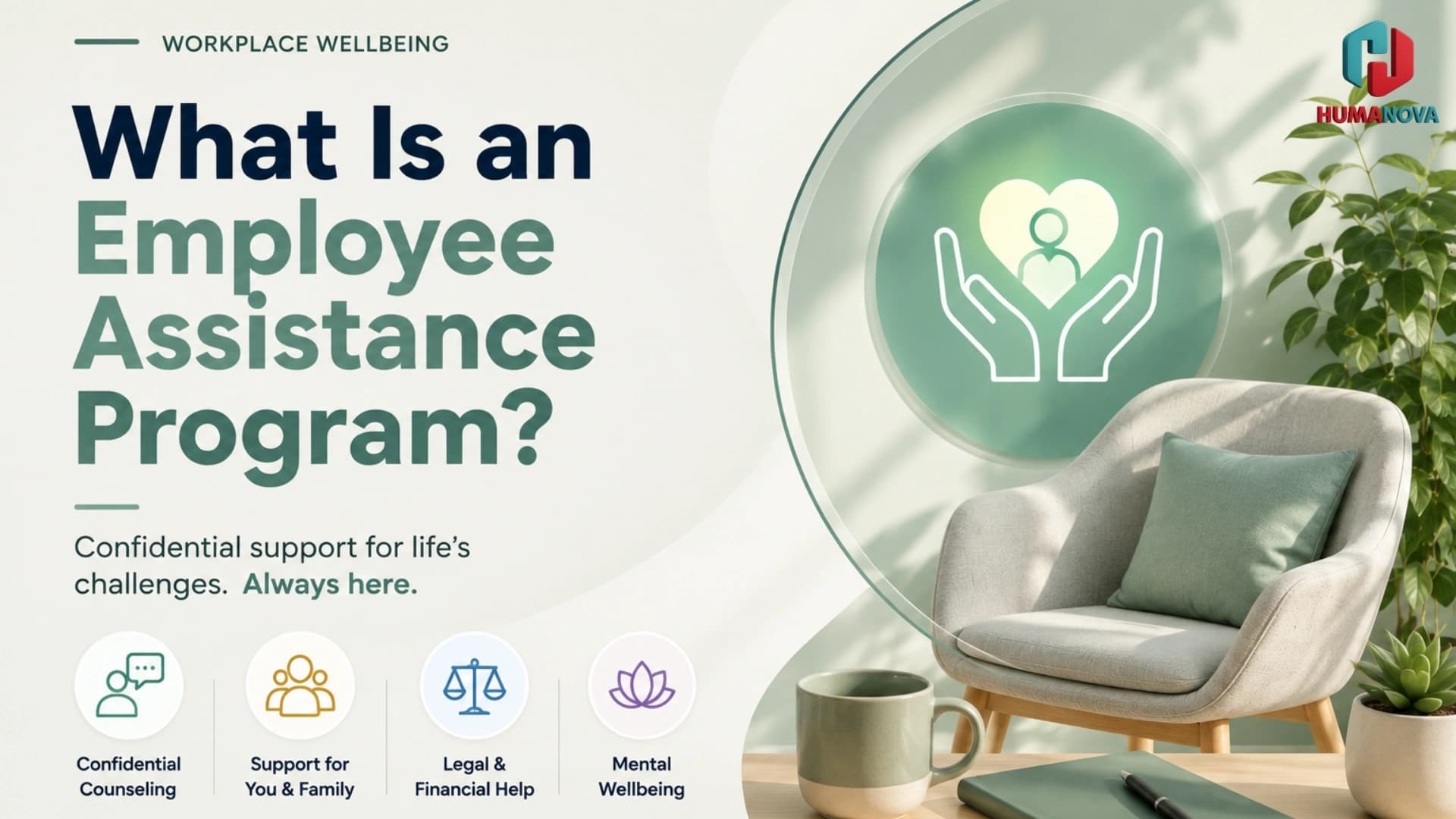
What Is an Employee Assistance Program? A Core Piece of Workplace Mental Health Solutions
An Employee Assistance Program (EAP) is a confidential, employer-supported counseling, mental health, and, in some cases, legal or financial referral and/or services provided to employees via a third-party service provider. This is one of the most traditional workplace mental health solutions that continues to be used today, but by itself, this isn't the answer to all of employees' mental health challenges.
What an Employee Assistance Program Actually Covers
Most EAPs offer a set number of free counseling sessions per year, along with a helpline employees can call for support with stress, anxiety, relationship issues, or workplace conflict. Many also extend to family members, and some include referrals for legal or financial concerns.
The core promise of an EAP is confidentiality, conversations are meant to stay between the employee and the provider, with the employer only seeing aggregate usage data, never individual details.
Why EAPs Exist as a Workplace Benefit
EAPs were created to provide an employee a confidential, confidential channel to discuss personal issues without having to bring it to HR or manager's attention. For decades EAPs were one of the few structured mental health benefits most companies provided and many organizations still include an EAP, the main, if not only, mental health support in their list in India.
Where Traditional EAPs Fall Short
Low Awareness and Low Usage
The biggest gap in most EAP programs isn't the service itself, it's that employees often don't know it exists, or have forgotten the details by the time they need it. A benefit buried in an onboarding packet from months or years ago rarely comes to mind during an actual crisis.
Friction at the Moment of Need
Booking a session through a call center or a separate portal adds friction exactly when someone has the least capacity to deal with it. Many employees who might have used an EAP in a moment of acute stress simply don't, because reaching support takes more steps than they're able to manage that day.
No Visibility Into Whether It's Actually Helping
The typical Traditional EAP will provide feedback to HR on an annual, and sometimes bi-annual basis, in the form of utilization percentage. That's just an indicator for HR if people are using the benefit or not; it doesn't tell HR if team-level stress is increasing over time, in which department it's becoming more common, or if the benefit program is helping to prevent burnout before it causes employees to leave.
How Modern Workplace Mental Health Solutions Build on the EAP Model
An EAP still has a place, confidential counseling access matters. But the strongest workplace mental health solutions today pair it with real-time, ongoing data instead of treating it as a standalone annual benefit.
Combining Counseling Access With Continuous Signals
Instead of having to wait for a utilization report twice a year, modern platforms monitor the trends of mood and engagement, and HR can get a glimpse that a team's wellbeing is slipping before it becomes noticeable in an exit interview.
Making Support Easier to Reach in the Moment
Confidential chat-based counseling, accessible directly within a tool employees already use daily, removes much of the friction that keeps traditional EAP utilization low. The easier support is to reach, the more likely someone is to use it when they actually need it.
Humanova brings this model together for Indian HR teams, combining confidential counselor chat with real-time mood tracking and anonymous surveys, so support is easier to access and HR gets team-level visibility without ever seeing an individual employee's private data.
Giving Managers Team-Level Visibility, Not Individual Data
Modern platforms flag which teams may be struggling through aggregated dashboards, giving managers something actionable, a prompt to check in, a resource to share, instead of a single utilization number with no context behind it.
Should Your Organization Rely on an EAP Alone?
For most Indian companies, an EAP alone is no longer enough. Attrition remains costly, India's overall attrition rate has sat around 16–17% in recent years, with sectors like IT and e-commerce running higher, and a benefit employees rarely use or remember doesn't move that number. Pairing an EAP with continuous, anonymous data gives HR the earlier, more specific signals needed to act before stress turns into resignations.
FAQ: Employee Assistance Programs and Workplace Mental Health
1. What is the main purpose of an Employee Assistance Program?
Transform your workforce wellbeing today
Interested in learning how Humanova can elevate your team's wellness and HR metrics? Connect with our team for a personalized walkthrough.
An EAP provides workers with secret access to counseling and assistance in cases of stress that can be personal or related to their job, without the necessity to involve their manager or the HR. This is intended as a private and professional service that is distinct from the normal chain of command.
2. Is an EAP the same as workplace mental health support in general?
No, an EAP is one specific benefit within a broader workplace mental health strategy. Comprehensive solutions also include things like mood tracking, anonymous surveys, and manager training, which an EAP alone doesn't cover.
3. Why do so few employees use their company's EAP?
Low awareness and friction are the two biggest reasons. Many employees forget the EAP exists, or find the process of booking a session too cumbersome to use during an actual moment of stress.
4. Do Indian companies commonly offer EAPs?
Yes, EAPs are a fairly standard benefit at larger Indian employers, though usage rates tend to mirror the global pattern, offered widely, but used by only a fraction of eligible employees each year.
5. Can an EAP work alongside newer tools like mood tracking and anonymous surveys?
Yes, and this combination is more effective than either would be taken alone. The EAP offers one-on-one confidential help, and regular tracking data will allow HR to identify issues and help people seek assistance before reaching a crisis level.
6. How can HR improve low EAP utilization?
Making the service easier to find and access, ideally within tools employees already use, tends to raise usage more than simply re-announcing the benefit once a year. Removing steps between "needing support" and "reaching it" is usually more effective than raising awareness alone.
Ready to give your teams mental health support that's easier to reach, and HR the visibility to know it's actually working?