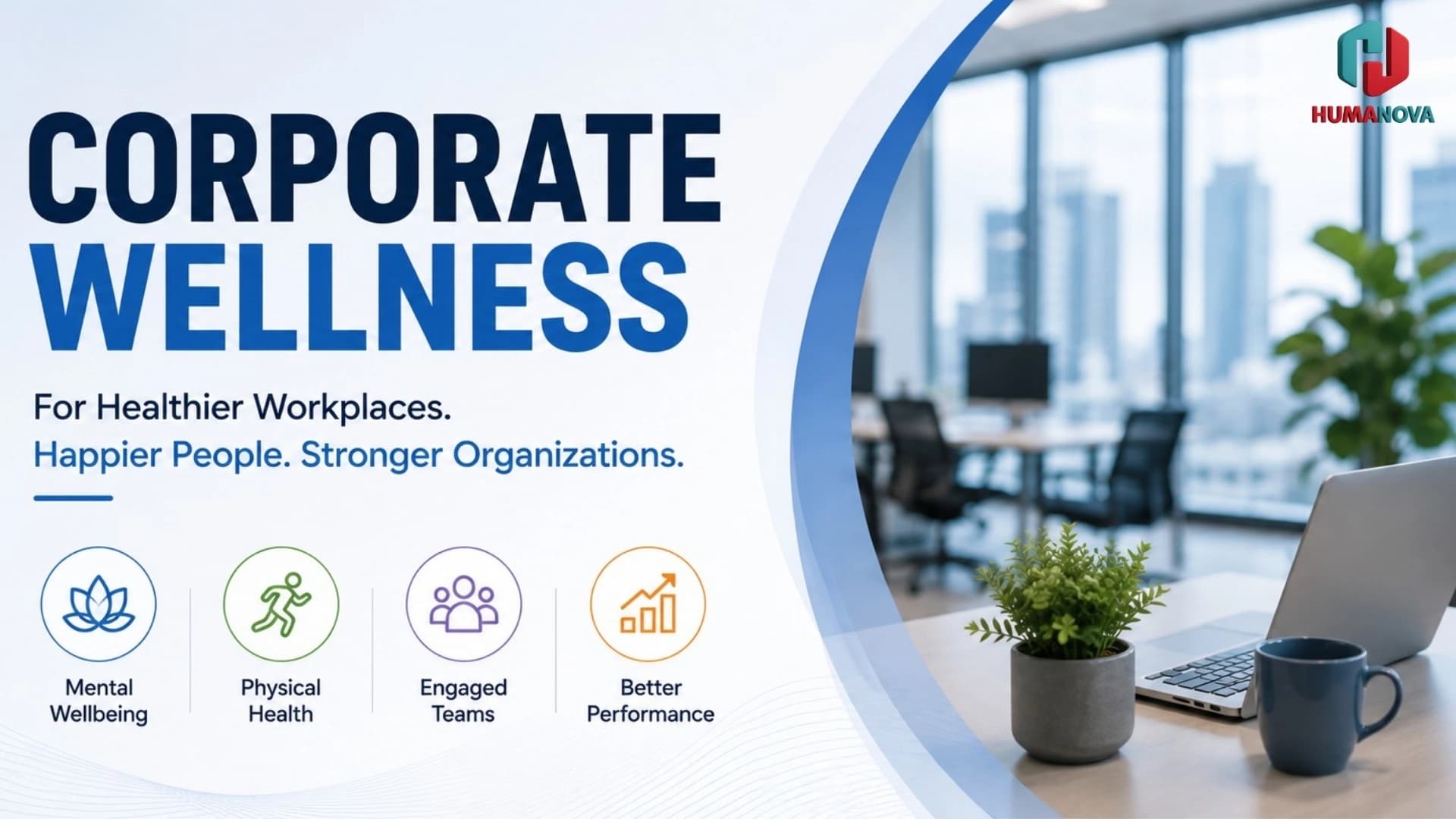
Corporate wellness solutions are the programs and tools organizations use to support employee physical and mental health, ranging from fitness benefits to mood tracking and confidential counseling. The strongest solutions go beyond perks, they combine ongoing data with real support, so HR can catch problems early instead of reacting after they've already cost the company an employee.
What Corporate Wellness Actually Means Today
The term "corporate wellness" used to mean gym memberships, health insurance top-ups, and the occasional yoga session. That definition hasn't disappeared, but it's incomplete. A workforce can have excellent physical health benefits and still burn out, disengage, and leave, because physical wellness and mental wellbeing are related but separate problems.
Modern corporate wellness solutions treat both together: physical health benefits alongside continuous visibility into stress, engagement, and morale. The goal isn't just offering more benefits, it's understanding whether the benefits offered are actually reaching the people who need them.
Why Perk-Based Wellness Often Falls Short
A wellness stipend or a subsidized gym membership helps the employees who were already inclined to use them. It does very little for someone quietly overwhelmed by workload, or a team affected by a manager's poor communication style. Perks address individual choices; they don't surface systemic problems.
Why This Matters More for Indian Employers Right Now
Attrition remains one of the most expensive, persistent problems facing Indian companies. Overall attrition has hovered around 16–17% in recent years, running considerably higher, often 25–29% in sectors like IT and e-commerce. Much of this attrition traces back to conditions that were visible in employee sentiment well before the resignation letter, if anyone had been tracking it.
Replacing a mid-level employee after the recruiting, onboarding and the loss of productivity are added together can easily cost several lakhs. A wellness program that notices falling morale is usually cheaper than the repeated expense of replacing a single mid-level employee who leaves because no one saw the issue in time.
The Core Components of an Effective Wellness Solution
Real-Time Mood Tracking
Short, recurring check-ins build a running picture of how teams are actually feeling, revealing a dip in morale after a tough deadline or reorg while there's still time for a manager to respond, not months later during an exit interview.
Anonymous Surveys People Trust Enough to Answer Honestly
Employees give noticeably more honest feedback when they're confident their responses can't be traced back to them. This is the difference between a survey that reflects reality and one that reflects what people think they're supposed to say.
Manager Dashboards That Protect Individual Privacy
HR and team leads need visibility into which teams are showing signs of strain, without ever seeing which specific employee said what. Most legacy wellness tools get this balance wrong, sharing too little data to act on, or too much, which quietly erodes the trust that made the data honest.
Humanova is built around this exact balance for Indian organizations, combining real-time mood tracking, anonymous surveys, and manager dashboards, so HR gets team-level visibility while every individual employee's response stays fully confidential.
Confidential Counselor Access
Mental health support only works if people are willing to use it. Confidential, chat-based counseling, reachable directly and privately, without going through a manager, removes the biggest barrier that keeps employees from seeking help: the fear of being seen as struggling.
Building a Wellness Strategy That Actually Works
Combine Physical and Mental Wellness, Don't Separate Them
Fitness benefits and mental health support shouldn't operate as two disconnected line items in a benefits document. Employees dealing with chronic stress often show physical symptoms first, fatigue, poor sleep, more sick days, so a joined-up approach catches problems that a purely physical or purely mental health program would miss on its own.
Give the Data Somewhere to Go
A dashboard showing declining morale is only useful if it triggers a next step, a manager check-in, a shared resource, a policy review. Wellness tools that stop at reporting, without a clear path to action, tend to produce data nobody ends up using.
Make the Program Continuous, Not Seasonal
A single wellness week or annual health camp creates a short-lived spike in participation that fades quickly. Programs that check in regularly, as part of the normal rhythm of work, are far more likely to catch problems while they're still manageable.
Transform your workforce wellbeing today
Interested in learning how Humanova can elevate your team's wellness and HR metrics? Connect with our team for a personalized walkthrough.
FAQ: Corporate Wellness Solutions
1. What is included in a corporate wellness solution?
This comprehensive solution can involve physical health benefits, mental health resources including confidential counseling, as well as follow-up measurement systems including mood tracking and anonymous surveys. The best programs feature all three, rather than one or two.
2. How is corporate wellness different from an Employee Assistance Program?
An EAP is usually just one component, confidential counseling access, within a broader corporate wellness strategy. Wellness solutions also cover physical health benefits and ongoing data tools that an EAP alone doesn't address.
3. Do wellness programs actually reduce attrition?
Programs that catch declining morale early and lead to real action, not just perks, tend to reduce the conditions that drive attrition, like unsustainable workload or poor management. A wellness program without a feedback and action loop is far less likely to move retention numbers.
4. Are corporate wellness solutions only relevant for large companies?
No, smaller organizations often feel the impact of a struggling team even more acutely, since it affects a larger share of total output. Platform-based tools have made this kind of program accessible without requiring a dedicated wellness department.
5. How do you get employees to actually engage with a wellness program?
These are the two most important factors for real anonymity and tangible follow-through. When employees are aware of the positive results of previous feedback, they are much more likely to engage in future feedback sessions and surveys.
6. What's the most common mistake companies make with wellness programs?
Treating health and well-being as a group of fixed benefits of a continuous process that includes data and regular check-ins. A gym allowance or a wellness event can be part of the plan. Neither one shows HR if a certain group is having problems right now.
Ready to build a corporate wellness program that goes beyond perks, one that actually shows HR what's happening across your teams?