A customer-service team introduces an AI agent that can classify requests, retrieve account details and prepare responses. Leaders expect the team to handle more work without adding employees.
The calculation looks straightforward. The agent completes tasks, so the team gains capacity.
The reality is less simple.
Someone must decide what the agent can access, which requests it may handle and when a person must intervene. Employees need to check outputs and manage unusual cases. The manager must monitor quality, investigate errors and explain how roles are changing.
The team may gain capacity, but it also takes on new work.
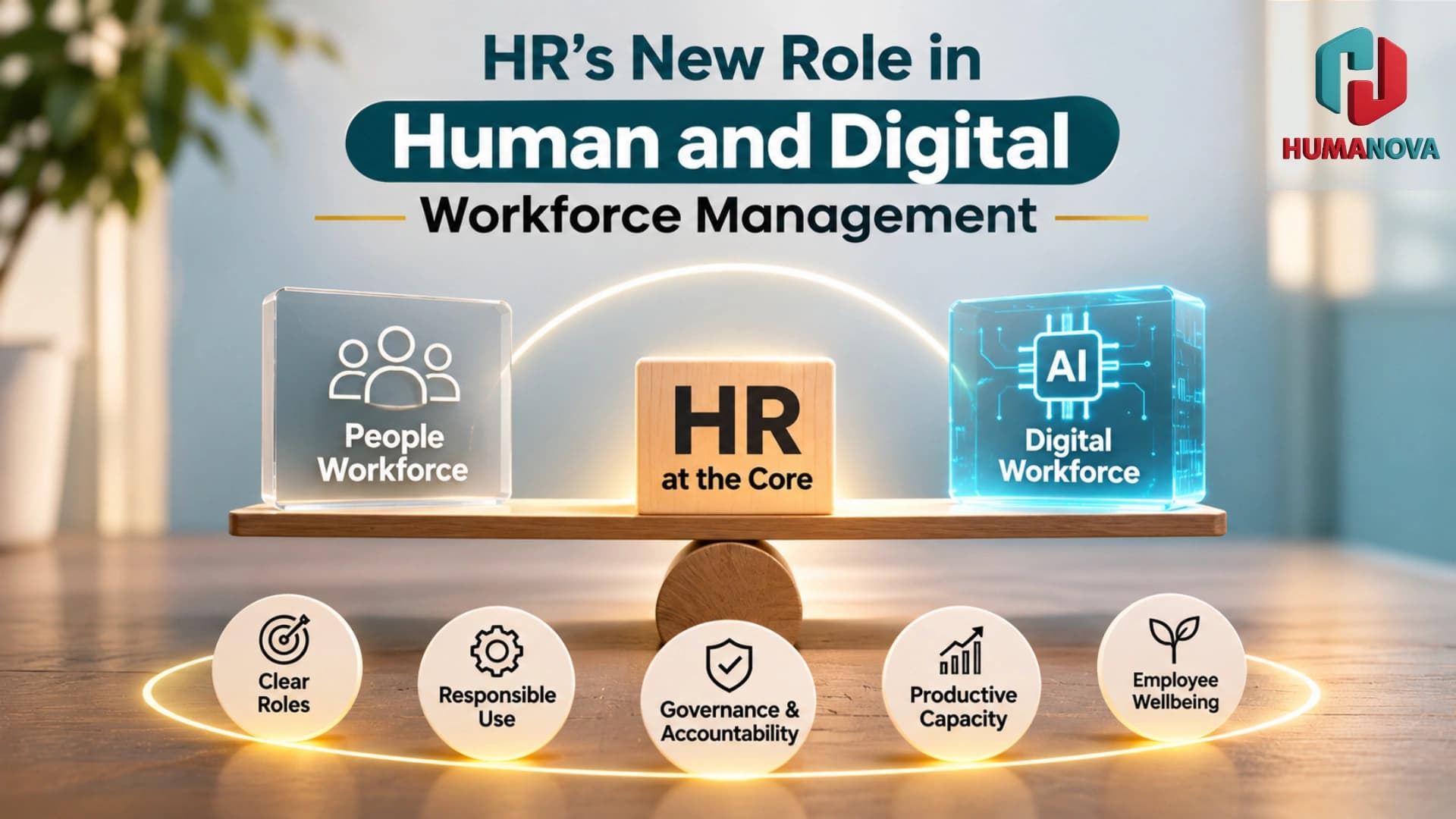
This is the emerging challenge of human and digital workforce management. Agentic AI is moving workforce planning beyond headcount. HR leaders must now consider employees, contractors, external partners, software and AI agents when deciding how work will be completed.
An AI agent is not an employee. It cannot hold legal responsibility, understand the personal consequences of a decision or provide the human judgment required in sensitive situations. Calling it a “digital coworker” may make the technology easier to describe, but the phrase must not hide accountability.
HR’s role is not to manage software as if it were a person. It is to help design a work system in which people and technology have clear responsibilities, managers have the capacity to supervise the system and employees receive honest communication and practical support.
Annual engagement surveys, occasional wellness events and one-time AI courses cannot address these issues alone. Employee wellbeing depends on the everyday experience of work: reasonable demands, clear roles, fair policies, capable managers, psychological safety and access to support.
Why human and digital workforce management matters now
AI agents can do more than generate text or answer questions. Depending on their design and permissions, they may complete sequences of tasks, interact with business systems and take action with limited human involvement.
Microsoft’s 2026 Work Trend Index describes the growth of human-agent teams in which people increasingly set direction, judge quality and decide when human intervention is necessary. Its research also found that organisational conditions, including culture, manager support and talent practices, accounted for twice the reported AI impact of individual effort alone. Microsoft Work Trend Index
The system around the employee matters.
A company may give people access to advanced technology, but that access will not produce better work if employees face unclear rules, unrealistic targets or managers who lack the confidence to guide AI-assisted work.
For Indian employers, the challenge can appear in global capability centres, technology businesses, financial services, professional firms, manufacturing operations and SMEs. The scale may differ, but the practical questions are similar:
- Which work should remain human?
- Which tasks can an agent support or complete?
- Who reviews the output?
- Who is accountable when something goes wrong?
- How will employees build skills when routine learning tasks are automated?
- Does AI reduce effort, or does it create additional checking and coordination?
These questions affect productivity, trust, engagement, retention and workforce readiness. They also influence how employees feel about their future in the organisation.
Employers cannot remove every uncertainty. They can avoid making it worse through silence, rushed implementation or promises they may not be able to keep.
Understanding the shift from headcount to productive capacity
Traditional workforce planning often begins with roles and employee numbers. How many people are required? What skills should they have? What will recruitment and employment cost?
Those questions remain important. Agentic AI adds another layer.
Productive capacity considers the full combination of resources required to achieve an outcome. It may include employees, contractors, technology, management time, specialist review and the effort needed to correct mistakes.
Imagine a recruitment team using an AI agent to organise applications, schedule interviews and prepare candidate summaries.
The agent may reduce administrative work. Recruiters could spend more time with candidates and hiring managers.
However, someone must still check whether the summaries are accurate, protect candidate information and notice context the system missed. A person remains responsible for the hiring decision.
If recruiters spend substantial time correcting the summaries, the expected capacity gain may not materialise. If the organisation removes too much entry-level work, junior recruiters may also lose opportunities to build the judgment needed for more senior responsibilities.
This is the difference between theoretical capacity and usable capacity.
AI can increase usable capacity when it removes unnecessary effort without weakening quality, accountability or learning. It can reduce capacity when it creates rework, confusing handoffs or additional supervision.
The effect must be assessed at task level. Preparing a draft is different from making a disciplinary decision. Scheduling a meeting is different from interpreting an employee’s wellbeing or deciding whether someone should be promoted.
AI-related stress is also not the same as a clinical mental health condition. Employee concern may reflect workload, job uncertainty, unclear expectations or limited confidence with new technology. HR should not diagnose employees from surveys, productivity data or digital behaviour.
Aggregated patterns can indicate where further conversation is needed. They are not proof of an individual problem.
What organisations often get wrong
1. Treating AI agents as literal employees
Terms such as “digital worker” can blur an important distinction. An AI agent is software. It does not carry human accountability, professional responsibility or concern for the people affected by its decisions.
Each AI-assisted process needs a named human owner and documented limits.
2. Reducing headcount before redesigning work
Some organisations assume that automated capacity can replace human capacity directly.
This can overlook implementation work, review time, exceptions, security requirements and the organisational knowledge employees contribute. Gartner has reported that workforce reductions associated with autonomous technologies do not by themselves produce better returns. Its guidance emphasises investing in the skills and operating structures needed for people to direct and govern autonomous systems. Gartner
Test the redesigned workflow before making permanent staffing decisions.
3. Ignoring the manager’s new workload
An agent may reduce task effort while increasing oversight effort.
Managers may need to review results, investigate failures and coordinate human handoffs. Gartner recommends looking at a manager’s “span of complexity”, including the number and autonomy of agents, rather than relying only on the number of employees supervised. Gartner on agentic AI and manager oversight
4. Introducing AI without role clarity
Employees may not know which responsibilities remain theirs, what the agent may do or how their performance will be assessed.
Unclear implementation can also create contradictory expectations: use AI more, work faster, make no mistakes and accept responsibility for outputs the employee may not fully understand.
5. Confusing employee listening with surveillance
Prompt counts, application activity and response times do not explain whether employees understand the new work system.
Intrusive monitoring may discourage experimentation and honest reporting. Employees need safe ways to report errors, workload pressure and concerns about changing roles.
What HR leaders and managers can do now
1. Map the work before allocating it
Start with the business outcome, not with the technology purchased.
Break each workflow into tasks and decisions. Ask:
Transform your workforce wellbeing today
Interested in learning how Humanova can elevate your team's wellness and HR metrics? Connect with our team for a personalized walkthrough.
- What knowledge does this task require?
- Does it involve judgment, empathy or negotiation?
- What happens if the result is wrong?
- Does it involve personal or confidential information?
- Must the final decision be explainable?
- Does this task help employees develop important experience?
- Can AI support the work, or should it complete it?
The ILO’s research on generative AI and jobs suggests that most exposed occupations are more likely to be transformed than eliminated because human input remains necessary. Task-level planning helps organisations prepare for that transformation.
2. Define decision rights and human ownership
Document what each agent can access, what it may do without approval and which situations require human review.
The operating model should also identify:
- The person responsible for the business outcome.
- The team responsible for technical maintenance.
- Who reviews quality and risk.
- Who handles exceptions.
- Who can change the agent’s instructions.
- Who can suspend or retire it.
High-impact decisions involving employment, safety, legal rights, finances or sensitive personal data require proportionate human oversight.
HR should work with IT, legal, information security, finance and business leaders when defining these boundaries.
3. Plan capacity across people and technology
Create workforce scenarios that include:
- Human capacity for judgment, relationships and exceptions.
- Agent capacity for suitable, repeatable tasks.
- Contractor capacity for temporary or specialist needs.
- Management capacity for supervision and coordination.
- Learning capacity for reskilling and practice.
- Technical capacity for security, maintenance and support.
Do not assume that every hour saved by an agent becomes an available employee hour. Some time will be spent checking results, managing exceptions or responding to additional demand.
A controlled pilot can compare expected capacity with the actual effect on effort, quality and workload.
4. Prepare managers and employees
Employees may need AI literacy, verification skills, process knowledge and confidence in escalating concerns. They also need time to practise.
Training should use realistic scenarios. Ask employees to review flawed outputs, identify risks and decide when human intervention is required.
Managers need additional support. They must learn how to allocate work between people and agents, set standards and discuss role changes honestly.
If an employee is worried about job security, the manager should not offer reassurance that has not been authorised. A better response is to explain what is known, acknowledge what remains undecided and direct the employee to appropriate support.
Managers should support employees without being expected to diagnose or treat mental health conditions.
5. Create a continuous listening and governance process
Agentic systems will change as technology, permissions and business needs develop. Workforce planning must change with them.
Use voluntary surveys, group discussions, manager feedback and confidential channels to identify:
- Tasks that have become easier.
- New forms of rework.
- Unclear handoffs.
- Agent errors.
- Gaps in training.
- Workload pressure.
- Concerns about fairness or job impact.
Review themes at team or workforce level. Explain what employees, managers and HR can see.
Most importantly, close the feedback loop. Tell employees what was heard, what will change and what will remain the same.
The role of technology
A workplace wellbeing platform can make support, learning and feedback easier to access during the shift to human-agent work.
Employees may benefit from confidential support routes, virtual one-to-one sessions, coaching, voluntary check-ins and practical learning resources. Managers may need guides for difficult conversations and access to leadership development.
Anonymous feedback and privacy-conscious workforce insights can help HR identify recurring themes, such as role confusion or rising review workloads.
These tools require clear consent, role-based access and communication about how information is used. Confidential support information should remain appropriately protected.
Workplace technology should not infer an employee’s emotional state from digital behaviour or become a surveillance system. It cannot replace safe workloads, professional care, human conversations or responsible management.
How Humanova supports a more connected approach
Humanova can help organisations connect confidential wellbeing support, coaching, employee feedback, leadership development, learning resources and privacy-conscious workforce insights.
This can give employees an accessible support route during role change, help managers prepare for sensitive conversations and give HR aggregated insight into recurring workload or capability themes.
The platform does not replace accountable leaders, HR professionals, counsellors, psychologists, healthcare providers or an EAP.
How to measure whether the approach is working
Measure the health and performance of the work system, not only the number of agents deployed.
Useful measures include:
- Quality and accuracy of agent-assisted work.
- Frequency and type of human intervention.
- Errors, exceptions and rework.
- Time required for oversight.
- Manager workload and confidence.
- Employee understanding of responsibilities.
- Participation in relevant learning or coaching.
- Employee feedback on trust and accessibility.
- Awareness and use of available support.
- Team-level engagement patterns.
- Absence and attrition trends, interpreted with other context.
Cycle time and output may matter, but they should be reviewed alongside quality and employee effort.
A team that processes more work while experiencing constant interruptions, hidden checking and falling trust may not have achieved a meaningful productivity improvement.
FAQs
1. What is human and digital workforce management?
Human and digital workforce management is the planning and coordination of work performed by employees, contractors, service providers, software and AI agents. It considers capacity, skills, accountability and risk rather than focusing only on employee numbers. People remain responsible for setting objectives, defining boundaries and overseeing decisions with meaningful consequences.
2. Are AI agents really digital coworkers?
“Digital coworker” is a useful metaphor, but an AI agent is software rather than an employee. It does not have employment status, personal responsibility or human judgment. Organisations should use the term carefully and avoid language that hides accountability. Every agent-assisted workflow should have a clearly identified human owner.
3. How does agentic AI change workforce planning?
Agentic AI requires HR to decide how work will be divided between people and technology. Planning must consider agent capacity, human judgment, supervision, skills, reskilling and risk. It must also account for new work created by AI, including quality checks, exception handling, security and workflow maintenance.
4. Will digital coworkers reduce the need for employees?
The effect will vary by task and organisation. Some activities may require fewer employee hours, while new needs may arise in oversight, process design and customer interaction. Organisations should test redesigned workflows before making staffing assumptions. They also need to consider how employees will develop experience if foundational tasks are automated.
5. Who is accountable for an AI agent’s decisions?
A named human owner should remain accountable for the business process. Responsibility may be distributed across business, technology, risk and compliance teams, but it should not be ambiguous. Organisations need clear approval thresholds, monitoring duties, escalation routes and authority to stop an agent when its behaviour or output falls outside acceptable limits.
6. What skills do managers need for human-agent teams?
Managers need practical AI literacy, process-design ability and confidence in judging quality. They should know how to allocate work, review outputs, manage exceptions and coach employees through changing responsibilities. They also need communication skills for discussing uncertainty and directing employees to support without attempting to become technical specialists or mental healthcare providers.
7. How can HR protect wellbeing during agentic AI adoption?
HR should communicate honestly, clarify roles, review workloads and create safe routes for questions. Employees need time to learn and permission to report errors. Managers require training and realistic spans of responsibility. Confidential support and coaching should be accessible, but wellbeing services cannot compensate for avoidable stress caused by poor work design.
8. Should HR monitor employee use of AI agents?
Some workforce-level information may be needed to understand adoption and risk, but monitoring should be necessary, proportionate and clearly explained. Prompt counts and activity data do not reveal whether someone used good judgment. Voluntary feedback, practical assessments and transparent governance usually provide more useful information without damaging trust.
Featured snippet
Human and digital workforce management means planning work across employees, contractors, software and AI agents while keeping human accountability clear. HR must map tasks, define decision rights, prepare managers, support employee wellbeing and measure productive capacity, including oversight and rework, instead of relying on headcount alone.
Conclusion
Human and digital workforce management expands HR’s responsibility beyond traditional workforce supply.
HR leaders must help decide how work should be performed, which capabilities the organisation needs and where human ownership cannot be delegated. They must also protect the conditions employees need to adapt: clear roles, manageable workloads, fair policies, capable managers and psychological safety.
Employees are more likely to thrive when support is easy to access, the organisation listens responsibly and avoidable sources of stress are addressed as part of work design.
“Explore how Humanova can help your organisation make employee wellbeing, coaching, feedback, and workforce insight easier to access.”